Cenote Suytun-Complete Visitor Guide
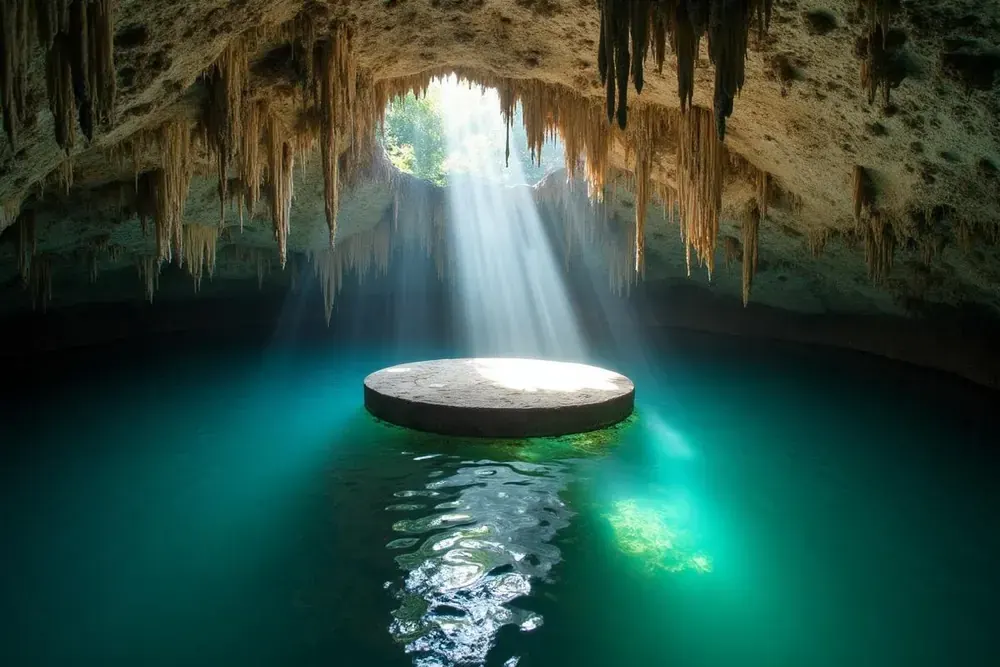
Cenote Suytun is a semi-open cenote located approximately 8 kilometers east of Valladolid in the Yucatan Peninsula of Mexico. The cenote sits inside a large underground cavern, where a small opening in the limestone ceiling allows a beam of natural sunlight to filter down into the chamber, illuminating the water and a circular stone platform at its center.
This dramatic lighting effect has made Cenote Suytun one of the most photographed cenotes in Mexico. The stone platform, partially submerged in the clear groundwater, provides a striking visual focal point that has appeared in travel photography worldwide.
Many travelers visit Cenote Suytun as part of a broader Yucatan itinerary that includes Chichen Itza, Valladolid, and other cenotes in the region. Its proximity to Valladolid and its position along common tour routes make it one of the most accessible and popular cenote stops in eastern Yucatan.
Suytun is one stop on the Valladolid cenote circuit. To see how its cave setting compares with open-air swimming sites elsewhere on the peninsula, browse cenotes across the Yucatan. Travelers pairing two stops in one day often add Cenote Oxman, a short drive away on the other side of Valladolid.
Quick Facts: Cenote Suytun
| Location | 8 km east of Valladolid on the road toward Chichen Itza, Yucatan |
| Type | Semi-open (underground cavern with ceiling opening) |
| Known for | Central stone platform + dramatic natural light beam |
| Best light beam timing | Late morning, approximately 11 AM–1 PM (varies by season) |
| Distance from Valladolid | ~8 km — approximately 10 minutes by car |
| Distance from Chichen Itza | ~45 km — approximately 40 minutes by car |
| Distance from Cancun | ~160 km — approximately 2.5 hours by car |
| Distance from Tulum | ~100 km — approximately 1.5 hours by car |
| Best time for fewer crowds | Before 10 AM or after 3 PM — avoid 11 AM–2 PM peak |
| Swimming | Available from the stone platform |
What Makes Cenote Suytun the Most Photographed Cenote in the Yucatan
Cenote Suytun has become one of the most recognizable cenotes in Mexico due to its unique underground setting and dramatic natural lighting. The combination of geological features and photographic appeal makes it stand out among the thousands of cenotes in the Yucatan Peninsula.
- Circular underground cavern with stalactites and limestone formations
- Central stone platform partially submerged in the cenote's clear water
- Dramatic beam of sunlight filtering through the ceiling opening, creating a spotlight effect
- One of the most photographed cenotes in Mexico and a popular subject in travel photography
- Conveniently located near Valladolid and along common Chichen Itza tour routes
Visiting Cenote Suytun
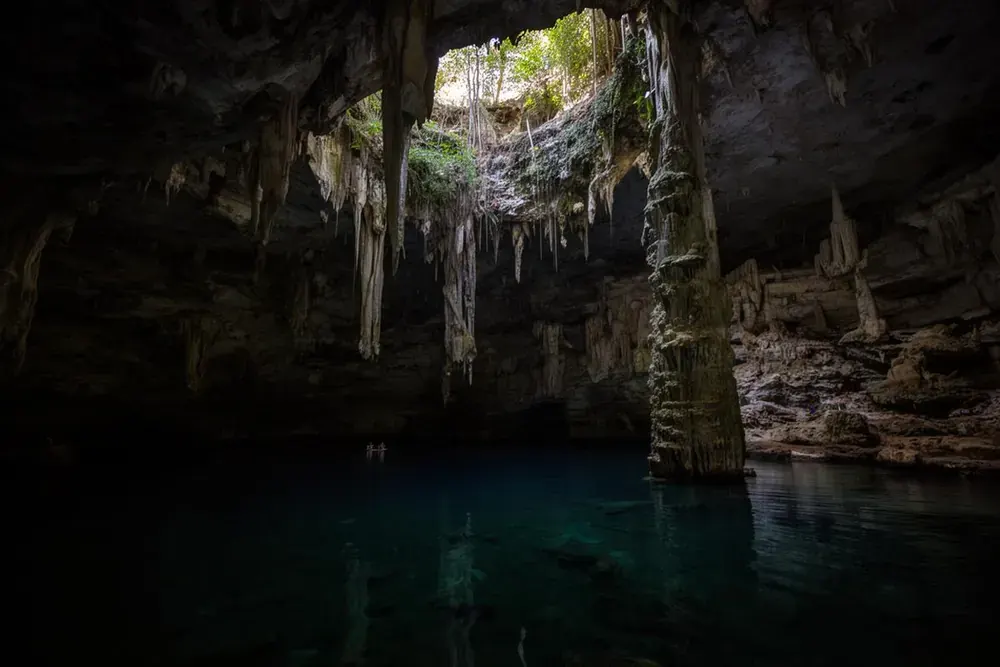
Visitors enter Cenote Suytun through a descending pathway that leads into the underground cavern. The stone platform at the center of the cenote is accessible via a narrow walkway and serves as the main photography spot, where visitors can stand with the beam of light behind or above them.
The cenote's underground atmosphere creates a cool, sheltered environment regardless of the outdoor temperature. The cavern features stalactites and natural limestone formations that add to the visual experience. Photography conditions are best when the sun angle creates a visible beam through the ceiling opening, typically during late morning hours.
Swimming is available at Cenote Suytun — the water is accessible from the stone platform. The facility includes changing areas and restrooms. Biodegradable sunscreen only — chemical sunscreen is prohibited to protect the groundwater. Bring your own; availability on-site is inconsistent.
Cenote Suytun and Valladolid
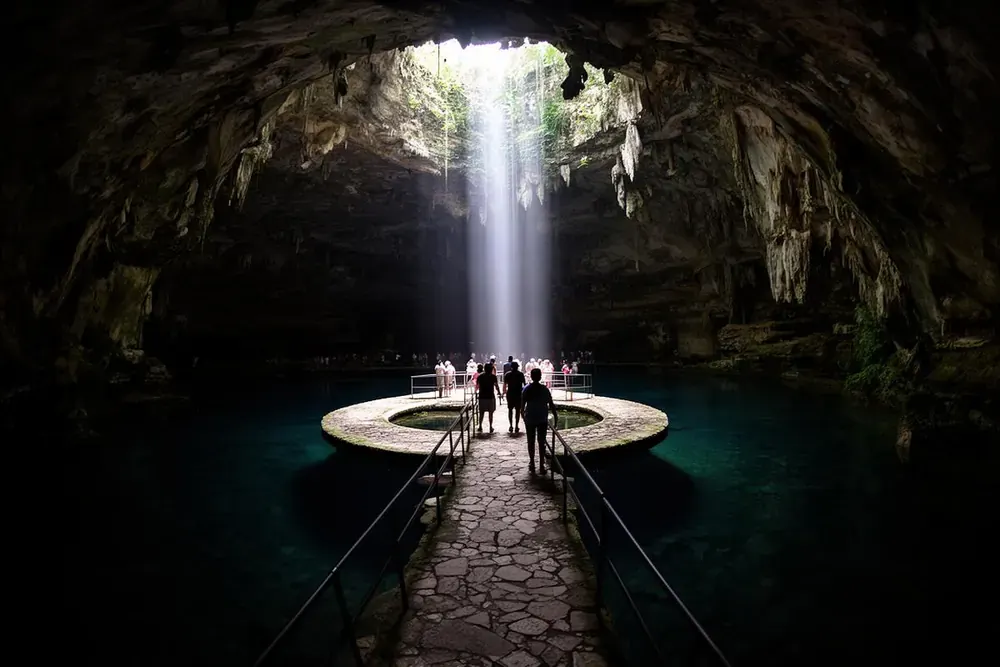
Cenote Suytun is located just 8 kilometers from the center of Valladolid, making it one of the most accessible cenotes for travelers staying in or passing through the colonial town.
Many visitors combine a morning visit to Cenote Suytun with an afternoon exploring Valladolid's historic center, including the Calzada de los Frailes, Convento de San Bernardino, and the town's central plaza. This pairing of natural beauty and colonial culture is a common feature of Yucatan travel itineraries, especially for travelers who are also visiting Chichen Itza during the same trip.
Best Time to Visit Cenote Suytun
The best time to visit Cenote Suytun for photography is during late morning, typically between 11 AM and 1 PM, when the sun's angle creates the most visible and dramatic beam of light through the ceiling opening. The exact timing varies slightly depending on the season and cloud cover.
For a less crowded experience, visiting early in the morning — shortly after the site opens — or later in the afternoon can help avoid the peak midday tour traffic. Weekdays also tend to be quieter than weekends.
Seasonally, the dry months between November and April are generally more comfortable for traveling in the Yucatan Peninsula. However, because Cenote Suytun is an underground cenote, the interior experience is largely unaffected by rain. The water temperature remains cool and consistent year-round, making the cenote visitable in any season.
How to Get to Cenote Suytun
Cenote Suytun is located east of Valladolid along the road toward Chichen Itza. It is well signposted and easy to reach by car. Approximate distances from major tourist destinations include:
- Valladolid: ~8 km (about 10 minutes)
- Chichen Itza: ~45 km (about 40 minutes)
- Cancun: ~160 km (about 2.5 hours)
- Tulum: ~100 km (about 1.5 hours)
Visitors can reach Cenote Suytun by rental car, by taxi from Valladolid, or as part of an organized guided tour that includes cenote stops. Many Chichen Itza day tours from Cancun, Playa del Carmen, and Tulum pass through this area and include cenote visits in their itinerary.
How Cenote Suytun Fits a Valladolid or Chichen Itza Route
Cenote Suytun is best understood as a Valladolid-area photo stop: the light beam, circular platform, and cave setting are the reason to come. If you are deciding between several swim stops near the ruins, use our cenotes near Chichen Itza guide for the local comparison.
For a wider regional view, compare Suytun with Ik Kil, Oxman, Tulum cave cenotes, and Riviera Maya swim stops in the main Yucatan cenotes guide. If you are still choosing by route, swim style, or photo goals, the Cenote Finder can help narrow the shortlist.
Nearby options have different strengths: Ik Kil is the classic open-air stop near the ruins, Oxman is better for rope-swing swimming, and Xkeken/Samula are cave cenotes near Valladolid. Suytun remains the photo-platform choice rather than the broad comparison page for the whole region.
Plan Suytun as Part of a Valladolid or Chichen Itza Day
Send us your travel date, pickup point, and whether Suytun is your preferred photo stop or one option among several. We can help place it into a clean route with Valladolid, Chichen Itza, or another cenote without turning the day into a long detour.
Practical Tips for Visiting Cenote Suytun
- Best light beam: 11 AM–1 PM — the sun angle that creates the visible beam through the ceiling opening peaks in late morning. The exact timing shifts slightly by season. Arrive at 11 AM if the light beam is your priority; arrive before 10 AM if avoiding crowds is your priority.
- The stone platform is the main attraction — it sits at water level in the center of the cavern. The narrow walkway to reach it is steady but can be slippery when wet. Sandals with grip are better than bare feet.
- Biodegradable sunscreen only — chemical sunscreen is prohibited. Apply before arriving or bring a biodegradable brand. You will be asked to rinse before entering the water.
- Arrive before 10 AM for fewer crowds — tour buses from Cancun and Riviera Maya arrive from late morning. The cenote is significantly quieter in the first hour after opening.
- Combine with Cenote Oxman on the same day — Oxman is 12 km from Suytun via Valladolid. Both take 45–60 minutes to visit. Suytun for photography (morning), Oxman for swimming (afternoon) is a practical sequence.
- It is primarily a photography cenote — the swimming area is limited compared to Cenote Ik Kil or Oxman. If swimming is your main goal, those two options offer a better experience.
Key Takeaways
- Cenote Suytun is a semi-open cenote located about 8 km from Valladolid in the Yucatan Peninsula.
- It is famous for its central stone platform and the dramatic beam of sunlight that filters through the cavern ceiling.
- The cenote is one of the most photographed natural landmarks in Mexico.
- Late morning (11 AM–1 PM) typically offers the best lighting for photography.
- Cenote Suytun is commonly visited alongside Chichen Itza, Valladolid, and other cenotes in the region.
- Other notable cenotes nearby include Cenote Ik Kil and Cenote Oxman.
Helpful Next Steps for Cenote Suytun
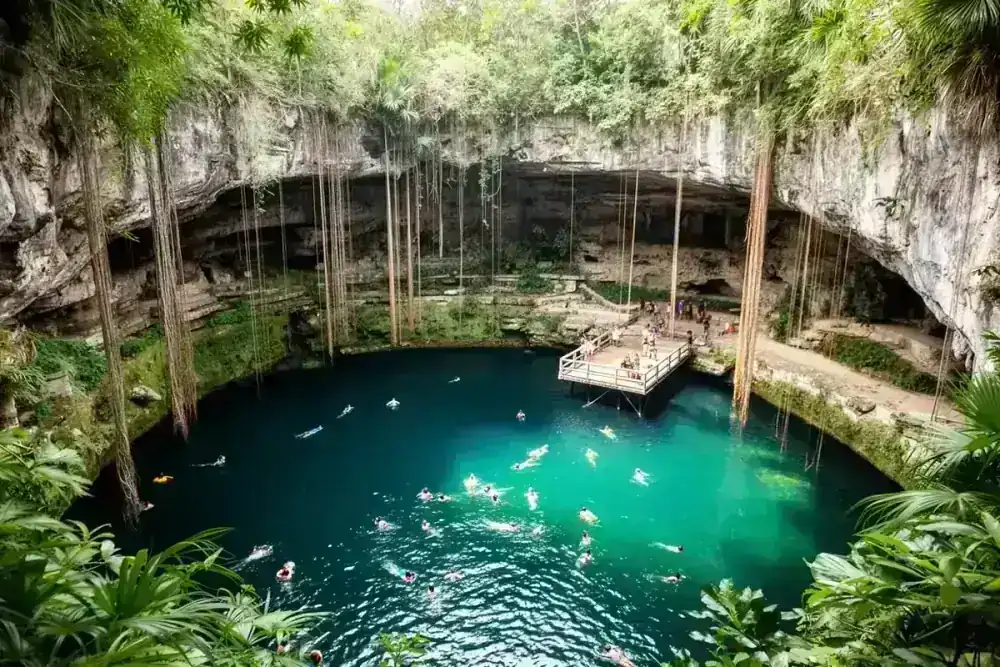
Choose the next step that matches how you want to experience Cenote Suytun, from a private guided tour to nearby stops or the wider area.
Compare Cenotes in Yucatan
Compare Suytun with Valladolid, Chichen Itza, Tulum, and Riviera Maya cenote options.
View detailsCenotes Near Chichen Itza
Use the local guide when you are comparing Suytun with Ik Kil, Oxman, and other ruins-adjacent swim stops.
View detailsFind the Right Cenote
Choose between photo-focused, cave, open-air, family-friendly, and swim-first cenote stops.
View detailsValladolid
Plan Suytun around a colonial-town stop, lunch, and nearby cenotes without backtracking.
View details