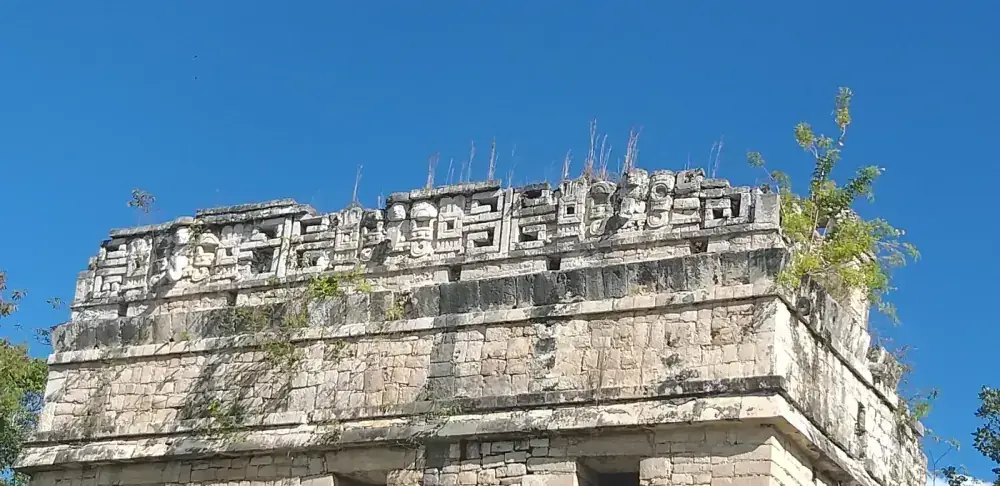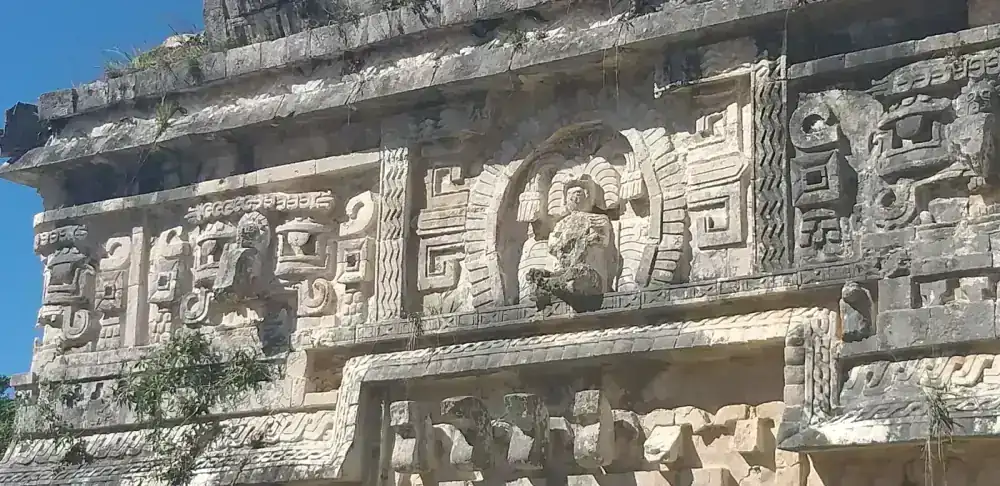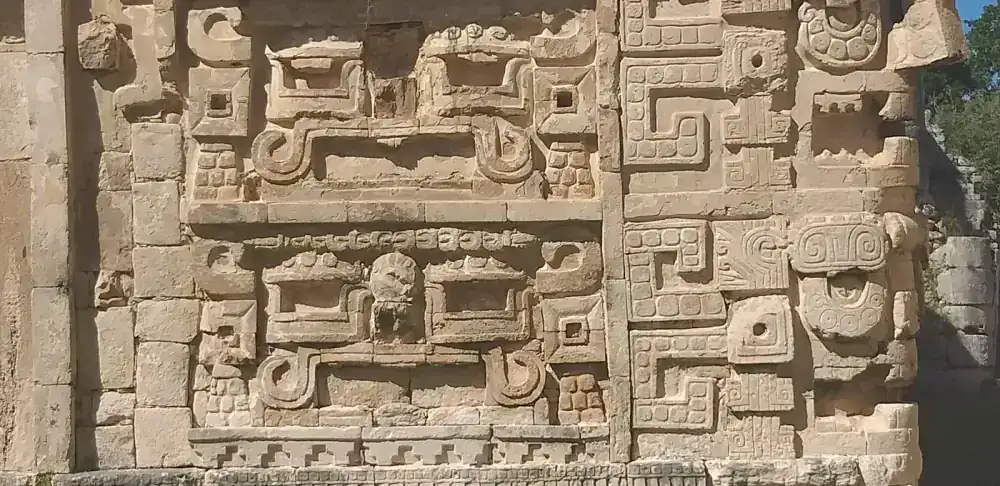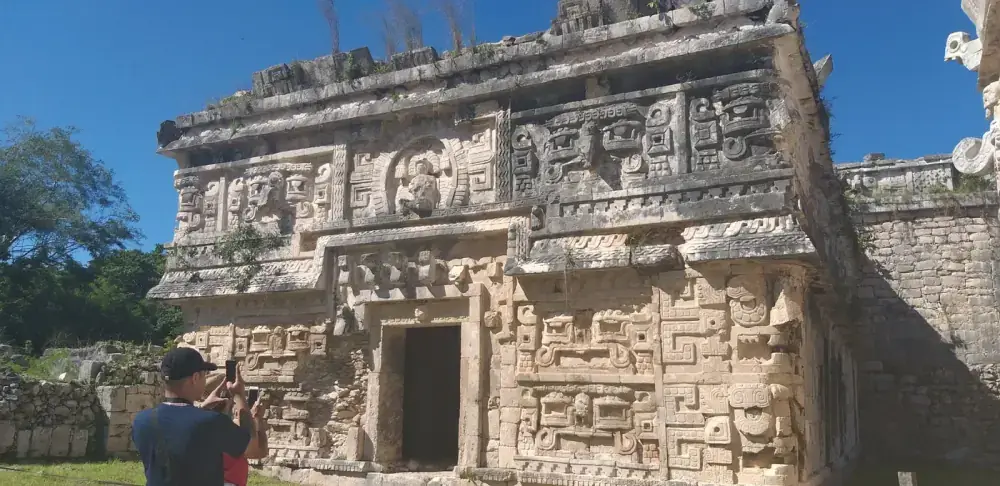
Maya carvings on the Nunnery building at Chichen Itza
📜 History Guide

History of Chichen Itza – Origins of the Ancient Maya City

Discover 1,400 years of Maya civilization at one of the world's most iconic archaeological sites — from early settlement to UNESCO World Heritage recognition.

Quick Historical Overview

Chichen Itza was one of the largest and most powerful cities of the ancient Maya civilization. Located in the Yucatan Peninsula of Mexico, the city was founded around 600 AD and reached its peak between 900 and 1200 AD, when it served as the political, economic, and religious capital of the region. The name "Chichen Itza" translates to "at the mouth of the well of the Itza," referring to the sacred cenote that provided water and held deep spiritual significance. Today it is recognized as a UNESCO World Heritage Site and one of the New Seven Wonders of the World, attracting over two million visitors annually.

~600 AD

First Settlement

900–1200

Golden Age

1988

UNESCO Listed

2007

New 7 Wonders

Origins of Chichen Itza

The origins of Chichen Itza are tied to the natural cenotes — limestone sinkholes filled with groundwater — that dot the Yucatan Peninsula. In a region with no above-ground rivers, these cenotes were essential sources of fresh water. The two large cenotes at Chichen Itza made the location strategically valuable for permanent settlement. The Itza people, a Maya group whose exact origins remain debated by scholars, established the earliest communities here around 600 AD.

The early city was built in the Puuc architectural style, characterized by intricate geometric mosaics and corbeled arches. Structures from this period include the Nunnery complex and parts of El Caracol, the astronomical observatory. These early buildings demonstrate that the founders already possessed sophisticated knowledge of architecture, mathematics, and celestial observation.

Geographically, Chichen Itza sat at the intersection of major trade routes connecting the coast to the interior. This position allowed the city to control the flow of valuable goods — obsidian from Guatemala, jade from the highlands, cacao from the lowlands, and salt from the northern coast — which fueled its rapid growth into a regional powerhouse.

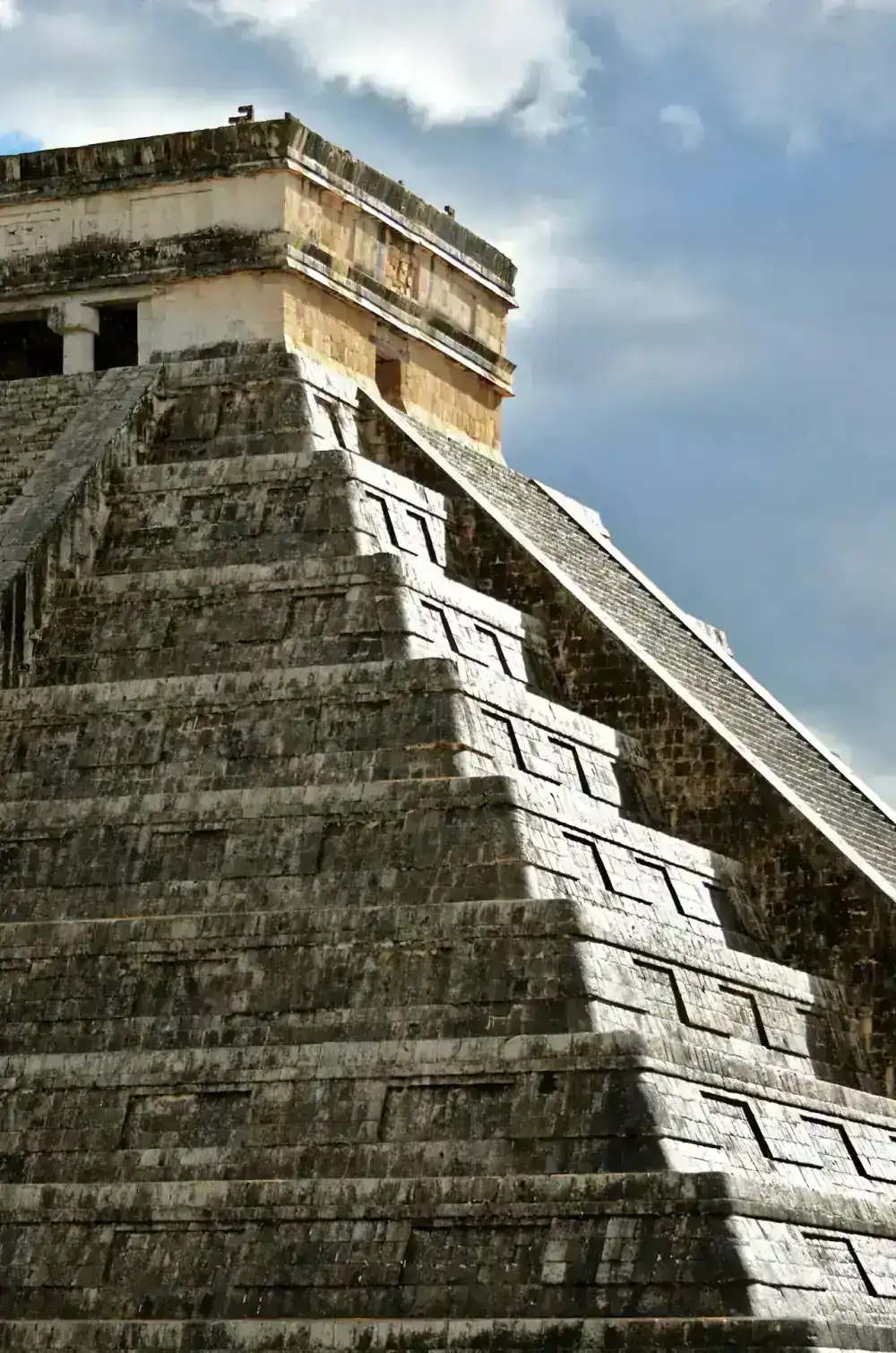
El Castillo pyramid at the ancient Maya city of Chichen Itza, Yucatan Mexico
El Castillo at Chichen Itza — the most iconic structure of the ancient Maya city

Who Built Chichen Itza

Chichen Itza was built by the Maya civilization, specifically by groups known as the Itza who inhabited the northern Yucatan. The Maya were not a single unified empire but rather a collection of city-states with shared language, writing systems, and cultural practices. Chichen Itza became the dominant city-state in the region during its golden age.

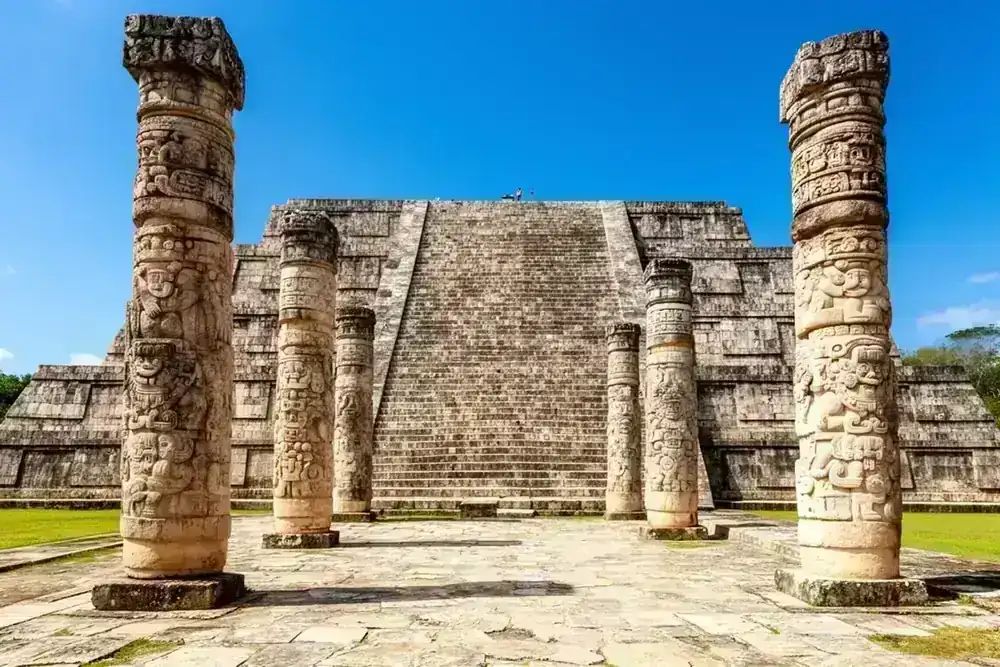
One of the most debated questions in Mesoamerican archaeology is the role of Toltec influence at Chichen Itza. The later structures — particularly El Castillo, the Temple of Warriors, and the Tzompantli (skull rack) — show striking similarities to architecture at Tula, the Toltec capital in central Mexico. Some scholars believe Toltec warriors or merchants migrated to the Yucatan, while others argue the similarities reflect shared cultural exchange across long-distance trade networks rather than conquest.

The feathered serpent deity Kukulcán, prominently featured throughout the later architecture, is the Maya equivalent of the Aztec Quetzalcoatl and the Toltec Quetzalcoatl — evidence of deep cultural connections across ancient Mesoamerica. The blending of Maya and central Mexican architectural styles at Chichen Itza produced a unique hybrid that distinguishes the city from purely Maya sites like Uxmal or Palenque.

When Was Chichen Itza Built

Chichen Itza was not built at a single point in time. The city evolved over approximately 600 years, with construction occurring in distinct phases. The earliest structures date to around 600 AD, while the most iconic monuments were built during the city's peak period between 900 and 1200 AD. Understanding this timeline helps explain why the site contains two distinctly different architectural styles.

~600 AD

Early Settlement

The first Maya communities establish settlements near the cenotes that give the city its name. Early Puuc-style architecture begins.

800–900 AD

Growth and Expansion

Chichen Itza develops into a significant regional center. Older structures like the Nunnery and parts of the Observatory are constructed.

900–1100 AD

Golden Age

The city reaches peak power. El Castillo, the Great Ball Court, and the Temple of Warriors are built. Trade networks extend across Mesoamerica.

1100–1200 AD

Cultural Fusion

Architectural styles blend Maya and Toltec elements. The Feathered Serpent (Kukulcán) becomes the dominant religious motif.

~1221 AD

Political Decline

Conflicts with Mayapán lead to the city's loss of political dominance. The population gradually disperses.

1500s–1800s

Colonial Period

Spanish colonizers document the ruins. The site remains a pilgrimage destination for indigenous communities.

1843

Modern Rediscovery

John Lloyd Stephens and Frederick Catherwood publish illustrated accounts that bring Chichen Itza to global attention.

1904–1930s

Archaeological Research

Edward Herbert Thompson purchases the hacienda containing the ruins. Systematic excavation and restoration begins.

1988

UNESCO World Heritage

Chichen Itza is designated a UNESCO World Heritage Site, ensuring international protection and preservation.

2007

New Seven Wonders

El Castillo is voted one of the New Seven Wonders of the World in a global public poll with over 100 million votes.

Chichen Itza During the Maya Civilization

At its zenith, Chichen Itza was the most important city in the northern Yucatan, with an estimated population of 35,000 to 50,000 people. The city functioned as a political capital, religious center, and commercial hub simultaneously. Its influence extended hundreds of kilometers in every direction.

Temple of the Warriors at Chichen Itza Mayan ruins archaeological site

Religious Architecture

El Castillo served as a temple to Kukulcán, with its 365 steps (91 per side plus the platform) representing the solar calendar. During the spring and fall equinoxes, shadows on the north staircase create the illusion of a serpent descending the pyramid — a phenomenon that demonstrates the Maya builders' extraordinary astronomical precision.

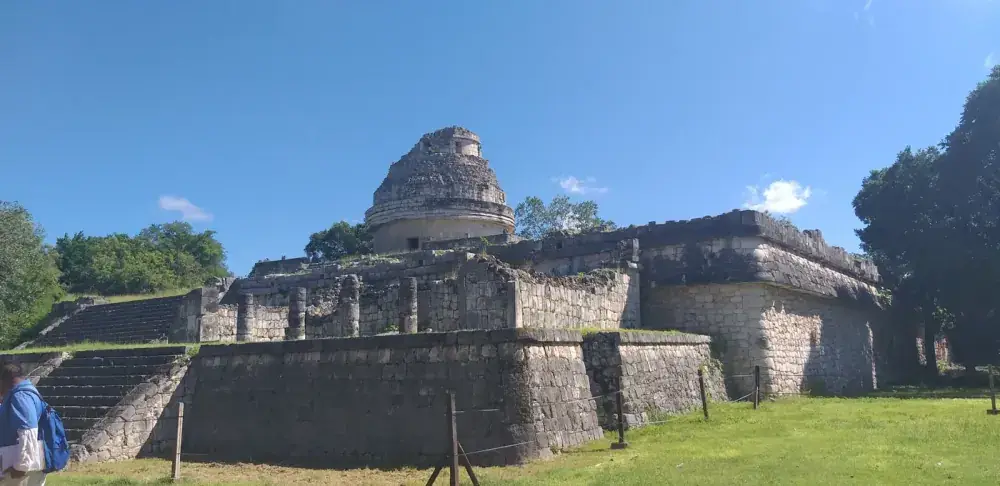
El Caracol observatory at Chichen Itza under a blue sky

Astronomy and Science

El Caracol, the circular observatory, contains windows precisely aligned with the movements of Venus and other celestial bodies. Maya astronomers calculated the length of the solar year at about 365.2420 days, closer to the true figure than the Julian calendar then used in Europe and rivaling the accuracy of the Gregorian calendar adopted there centuries later. This astronomical knowledge guided agriculture, ceremony, and public life.

The Great Ball Court, the largest in Mesoamerica at 168 meters long, hosted ritualized ball games that held deep political and religious meaning. The court's remarkable acoustic properties — a whisper at one end can be heard clearly at the other — suggest deliberate engineering. A clap at the base of El Castillo produces an echo resembling the call of the sacred quetzal bird, another intentional acoustic design. For more on visiting these structures today, see our best time to visit guide.

Decline of Chichen Itza

Around 1200 AD, Chichen Itza began losing its political dominance. The exact causes remain one of the great debates in Mesoamerican archaeology. Several theories compete for scholarly attention, and the true explanation likely involves a combination of factors.

The most widely cited theory involves conflict with Mayapán, a rival city approximately 100 kilometers to the west. According to indigenous historical accounts recorded after the Spanish conquest, a ruler named Hunac Ceel led a coalition that defeated Chichen Itza's leadership around 1221 AD. Archaeological evidence shows that Mayapán subsequently rose as the dominant city in the region.

Climate research has added another dimension. Sediment cores from the region show evidence of severe drought cycles during the 1100s and 1200s, which would have stressed agricultural production and potentially triggered social unrest. The disruption of long-distance trade networks — possibly caused by political instability across Mesoamerica — may have further weakened the city's economic foundation.

Importantly, Chichen Itza was never entirely abandoned. Even after losing political power, the Sacred Cenote continued to function as a pilgrimage site for centuries. When Spanish conquistadors arrived in the 1500s, they found the ruins still revered by local Maya communities.

Rediscovery of Chichen Itza

While local Maya communities never forgot Chichen Itza, the site gained international attention in the 19th century. In 1843, American explorer John Lloyd Stephens and British illustrator Frederick Catherwood published Incidents of Travel in Yucatan, featuring detailed engravings of the ruins that captivated European and American audiences. Their work sparked a wave of archaeological interest in Maya civilization.

In 1904, American consul Edward Herbert Thompson purchased the hacienda that included the Chichen Itza site. He controversially dredged the Sacred Cenote, recovering thousands of artifacts — gold, jade, pottery, and human remains — many of which were shipped to Harvard's Peabody Museum. This episode remains a sensitive subject in Mexican cultural heritage discussions.

Systematic archaeological restoration began in the 1920s under Mexican and international teams. The work of archaeologists like Sylvanus Morley and later INAH (Mexico's National Institute of Anthropology and History) gradually revealed the full scale and sophistication of the ancient city. Today, ongoing research continues to reveal new findings, including evidence of older structures hidden inside El Castillo and a water-filled cenote detected directly beneath the pyramid through geophysical surveys.

Why Chichen Itza Became a Wonder of the World

In 1988, UNESCO designated Chichen Itza a World Heritage Site, recognizing it as "one of the most important examples of the Mayan-Toltec civilization in Yucatan." The designation cited the site's exceptional architectural achievement, astronomical knowledge, and cultural significance.

In 2007, El Castillo was voted one of the New Seven Wonders of the World in a global poll organized by the New7Wonders Foundation. Over 100 million votes were cast worldwide. The recognition cemented Chichen Itza's status alongside the Great Wall of China, Machu Picchu, and the Taj Mahal as one of humanity's most iconic monuments.

Today, Chichen Itza receives over two million visitors annually, making it the most visited archaeological site in Mexico. Its combination of monumental architecture, astronomical precision, and cultural mystery continues to inspire scholars, travelers, and photographers from around the world. For practical advice on experiencing the site, see our transportation guide.

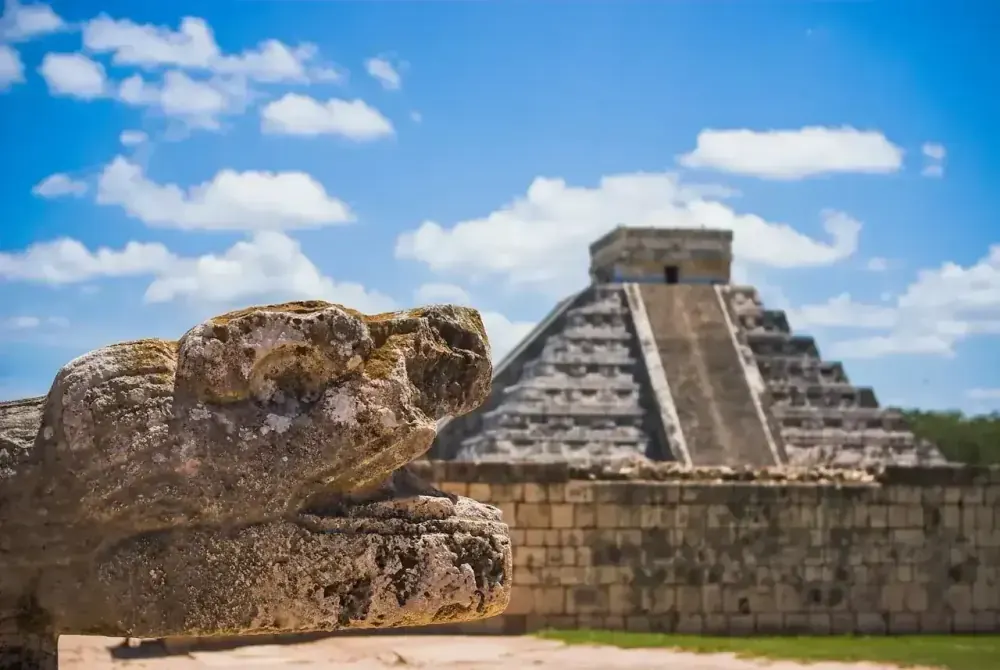
El Castillo pyramid detail at Chichen Itza — New Seven Wonders of the World site
El Castillo — voted one of the New Seven Wonders of the World in 2007
Ornate Maya building facade with carvings at Chichen Itza
An ornate carved facade showing Puuc-style details at Chichen Itza.
Close-up of ancient Maya carvings at Chichen Itza
Close-up detail of carved stone reliefs at Chichen Itza.
Stone relief detail on a Maya building at Chichen Itza
Stone relief patterns showing the architectural detail of Chichen Itza.

Key Historical Facts About Chichen Itza

  • El Castillo has 365 steps — one for each day of the solar year — demonstrating the Maya's precise calendrical knowledge.
  • A clap at the base of El Castillo produces an echo resembling the call of the sacred quetzal bird, a deliberate acoustic engineering feat.
  • "Chichen Itza" translates to "at the mouth of the well of the Itza," referring to the Sacred Cenote used for offerings to the rain god Chaac.
  • El Caracol's windows align with key positions of Venus, whose 584-day cycle the Maya tracked with enough precision to predict its appearances years in advance.
  • The Great Ball Court's whisper gallery effect allows a voice at one end to be heard 168 meters away at the other — an engineering marvel.
  • A smaller, older pyramid was discovered inside El Castillo through geophysical surveys, suggesting the Maya built over earlier structures.
  • During the spring and fall equinoxes, shadow patterns on El Castillo create the illusion of a serpent descending the north staircase.
  • At its peak, Chichen Itza's trade network stretched from present-day Honduras to central Mexico, spanning over 1,500 kilometers.

Experience This History in Person

Walk through 1,400 years of Maya civilization with an expert guide who brings the ancient stories to life at every structure. Tours depart daily from Cancun, Playa del Carmen, Tulum, and Merida.

Frequently Asked Questions

Chichen Itza was built by the Maya people of the Yucatan Peninsula over several centuries. The earliest structures date to around 600 AD. During its peak period (900–1200 AD), the city shows architectural influences from central Mexican cultures, particularly the Toltec.

See Chichen Itza With an Expert Guide

If you want help applying this guide to your dates, route, or group type, message us on WhatsApp. We can help you compare options and confirm availability — no payment required to enquire.

Free cancellation · No payment to enquire