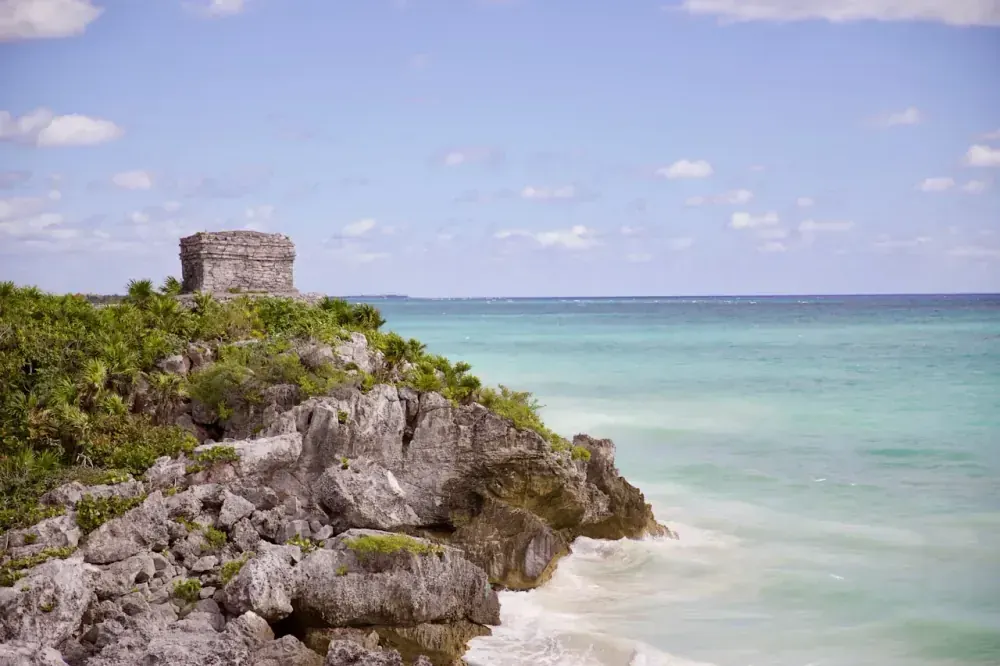
Tulum ruins on the Caribbean cliff — visitor guide
Visitor Guide

Tulum Ruins Guide 2026: Tickets, Hours, Tips & What to See

Complete visitor guide to Tulum Archaeological Zone, entry fees, opening hours, main structures, and how to visit the Maya clifftop ruins on the Caribbean coast.

Quick answer: Are Tulum ruins worth it?

Yes — for most Riviera Maya travelers, Tulum ruins are worth visiting. They are the only coastal Maya archaeological site in Mexico, with El Castillo above turquoise Caribbean water. The trade-off is crowds (peak 10 AM–2 PM) and a smaller site than Chichen Itza or Coba. Plan 1.5–2 hours on site, arrive at 8 AM, and pair with beach time below the cliffs. The displayed 2026 unified entrance fee is MXN 515 for international visitors and MXN 310 for Mexican nationals. The amount combines the archaeological-zone, CONANP and Parque del Jaguar charges. Comparing Tulum with Coba? Read the Tulum vs Coba guide.

Tulum Ruins Visitor Guide (2026)

Tulum is a Maya walled city on the Caribbean coast of Quintana Roo, Mexico, perched on 12-metre limestone cliffs overlooking the sea. The archaeological zone covers approximately 4 km² and contains about 60 preserved structures, of which the Castillo, Temple of the Frescoes, and Temple of the Descending God are the most significant. The ruins date primarily to the Late Postclassic period (1200–1521 CE). The displayed 2026 unified entrance fee is MXN 515 for international visitors and MXN 310 for Mexican nationals; the amount combines INAH archaeological-zone access (~100 MXN), the CONANP charge (~120 MXN) and Parque del Jaguar (~295 MXN) as carried-forward context from earlier reporting. Card readers at the gate may be unreliable. Maya Explorer Tours schedules private Tulum ruins days from Cancun, Playa del Carmen, and Tulum when travelers want entry fees and coastal timing handled together.

What Are the Tulum Ruins?

The Tulum ruins are the remains of a fortified Maya port city known as the Tulum Archaeological Zone, with most construction from the Late Postclassic era (1200–1521 CE). The site spans about 4 km² with roughly 60 visible structures, making it compact but historically rich.

Tulum is one of only three known walled Maya cities in the Yucatan region, and its clifftop setting above an 800-meter beach is unique. It is not a UNESCO World Heritage Site, but the UNESCO-listed Sian Ka'an Biosphere Reserve begins just south of town.

A private tour helps connect these facts to what you see on-site, especially trade routes, coastal defense, and why this tulum cliffside city became one of the best-known Maya landmarks.

Explore the private Tulum ruins tour

Hours and Entry Fees (2026)

Tulum Ruins Tickets and Entrance Fees

The displayed fee is presented as one combined amount covering INAH archaeological-zone access, the CONANP charge and Parque del Jaguar access.

ItemDetail
Opening hours8:00 AM – 5:00 PM daily (last entry 4:30 PM)
INAH fee~100 MXN
CONANP bracelet~120 MXN
Parque del Jaguar~295 MXN
International visitorsMXN 515 per person
Mexican nationalsMXN 310 per person
Parking~100 MXN
Train from parking to entrance~50 MXN round trip
PhotographyIncluded in entry
Video camerasNo additional fee

The public entrance fee does not by itself include a guide, private transportation, parking, food or drinks, or optional services. Some guided tour packages may include admission and other services in their package price.

Entrance fees and access arrangements can change. Verify the displayed total and current entry process before traveling.

Independent visitors usually handle split payments and transport logistics separately. On a private tour, entry fees are included and your guide handles the onsite process.

Private Tulum Ruins Tour

Main Structures to See

El Castillo (The Castle)

The largest structure at Tulum, standing about 7.5 meters high directly over the Caribbean. It likely worked as a maritime marker: sailors aligned coastal lights with openings in the structure to navigate safely. The classic photo is the castillo pyramid tulum view with turquoise water behind it, and the best angle is often from the beach below.

Temple of the Frescoes

A two-story building with carved masks of Chac at the corners. Partial interior murals survive, making it one of the most important painted monuments in the tulum walled city maya complex. Guides help you identify surviving details that many visitors walk past.

Temple of the Descending God

Named after the upside-down figure carved above the doorway. Interpretations vary: bee deity, Venus association, or setting-sun symbolism. The carving is the most distinctive sculptural motif in the temple of the descending god zone and a highlight for architectural detail.

Temple of the Wind

A round temple on the northern cliff edge, rare in Maya design. It is often linked to Kukulcán traditions and wind-related ritual practices, and its dramatic ocean-facing position makes it one of the strongest viewpoint stops in the site.

Getting to Tulum Ruins

From Cancun

From Playa del Carmen

  • Distance: 63 km south
  • Drive: ~45–60 minutes via Highway 307

From Tulum Town (Pueblo)

  • Distance: 4 km north
  • Taxi: ~50–80 MXN
  • Bike rentals widely available
Book private Tulum ruins tour

Best Time to Visit

Best daily window: 8:00–10:00 AM for cooler weather, softer light, and fewer groups.

Most crowded period: 10:00 AM–2:00 PM, when many cruise-connected and large coach groups arrive.

November–April: Drier season with lower humidity and generally more comfortable walking conditions.

May–October: Hotter and more humid but often fewer visitors; beach swim conditions can be excellent.

Tulum ruins are fully open-air on the cliff, with very limited shade near major monuments. Bring water, hat, and biodegradable sunscreen.

Tips for Your Visit

  • Wear swimwear under your clothes if you want quick beach access below the ruins.
  • Use biodegradable sunscreen only; chemical formulas are restricted in many protected areas.
  • Food options onsite are limited — carry snacks and water for a 2+ hour visit.
  • For photos, the best Castillo composition is usually from the beach below, not the upper path.
  • Plan 1.5–2 hours self-guided, or 2–2.5 hours with a certified guide.
  • Easy combos: Cenote Dos Ojos (18 km north), Gran Cenote (4 km west), Sian Ka'an area (15 km south). Pairing ideas are in the best cenotes near Tulum guide.

What private guiding changes

  • Explains fresco fragments and iconography that are difficult to interpret independently.
  • Uses route timing to avoid peak group flow patterns through key structures.
  • Adds flexibility for beach time without rushing your archaeological visit.
  • Bundles transport and entry logistics in one plan.
See private Tulum tour details

If you want help matching Tulum ruins with beach time or a cenote stop, message Maya Explorer Tours on WhatsApp.

Comparing Maya sites? Mayan ruins tours in Yucatan — all sites compared in one place.

Frequently Asked Questions

The displayed 2026 unified entrance fee is 515 MXN for international visitors and 310 MXN for Mexican nationals, combining the INAH archaeological-zone access, the CONANP charge and Parque del Jaguar. The public entrance fee does not by itself include a guide, private transportation, parking, food or drinks, or optional services; some guided tour packages may include admission and other services in their package price. Prices and access arrangements can change, so verify the displayed total and entry process before traveling.

Tulum Archaeological Zone is open daily from 8:00 AM to 5:00 PM. Last entry is at 4:30 PM. The site is open every day including Mexican holidays. Arriving at opening time (8 AM) is strongly recommended to visit before the large cruise group tours arrive between 10 AM and 2 PM.

Yes, there is a beach at the base of the cliffs within the archaeological zone, accessible via stone steps from the site. The beach is small, sandy, and in a protected cove with calm Caribbean water. Bring swimwear under your clothing. The beach is a highlight of the Tulum ruins visit and often less crowded than the ruins above.

Tulum ruins are approximately 130 km south of Cancun, about 1.5 to 2 hours by car via Highway 307. From Playa del Carmen: 63 km south (45-60 minutes). From Tulum Town (Pueblo): 4 km north by taxi (50-80 MXN). Private tours from Cancun or Playa del Carmen include hotel pickup and transport to the ruins.

No, the Tulum Archaeological Zone is not a UNESCO World Heritage Site. Tulum is protected under Mexican federal law (INAH). The nearby Sian Ka'an Biosphere Reserve (which begins south of Tulum) is UNESCO listed. Chichen Itza and Uxmal are the UNESCO World Heritage Maya sites in the Yucatan Peninsula.

Yes, for most Riviera Maya travelers, Tulum ruins are worth visiting. They are the only coastal Maya archaeological site in Mexico, with El Castillo above turquoise Caribbean water and beach access below the cliffs. The main drawbacks are midday crowds (10 AM-2 PM, especially cruise-connected groups) and a smaller monument scale than Chichen Itza. Arrive at 8 AM for the best experience. Pair with a cenote or beach afternoon for a strong half-day itinerary.

Plan 1.5-2 hours for a thorough visit: main structures (Castillo, Temple of the Frescoes, Temple of the Descending God), cliff viewpoints, and optional beach swim below. Add 30-45 minutes for parking, the train to the entrance, and ticket lines if you arrive after 10 AM. Tulum town visitors can reach the site in 15-20 minutes (4 km north). A guided tour typically covers the highlights in 90 minutes with context you would miss self-guided.

Ready to Visit Tulum Ruins?

If you want help applying this guide to your dates, route, or group type, message us on WhatsApp. We can help you compare options and confirm availability, no payment required to enquire.

No payment required to enquire