Chichen Itza Equinox: What the Serpent Shadow Means and When to Visit
Understand the famous equinox phenomenon at El Castillo, when it happens, and whether visiting during equinox season is right for your trip.
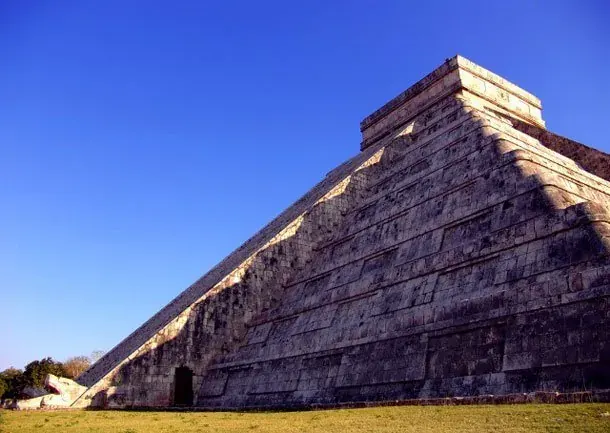
The Chichen Itza equinox is famous for the light-and-shadow effect that appears on El Castillo pyramid around the spring and autumn equinoxes. As the sun shifts, triangular shadows form along the pyramid staircase, creating the visual effect of a descending serpent — one of the most talked-about phenomena at any archaeological site in the Americas. This event attracts travelers interested in Maya astronomy, ancient architecture, and seasonal travel experiences across the Yucatan Peninsula.
This guide covers what the equinox phenomenon is, when it happens, whether it is worth visiting during equinox season, what crowds and logistics to expect, and how guided tours can simplify the experience.
This guide is prepared by Maya Explorer Tours, a local travel team helping visitors plan Chichen Itza equinox visits and seasonal timing around hotel pickup times, route timing, and travel style.
What Is the Chichen Itza Equinox?
The equinox at Chichen Itza refers to the seasonal solar alignment that produces a dramatic visual effect on El Castillo, the site's iconic step pyramid. Twice each year — once in spring and once in autumn — the position of the setting sun creates a cascading pattern of triangular shadows along the pyramid's northern staircase.
This phenomenon has made Chichen Itza one of the most celebrated examples of archaeoastronomy in the world. The precision of the alignment — where shadow, sunlight, and carved stonework combine to suggest the descent of a feathered serpent — speaks to the sophisticated understanding of celestial cycles that the ancient Maya builders possessed.
Visitors planning around the equinox should explore the full Chichen Itza destination guide for a broader understanding of the site and its key structures.
What Is the Serpent Shadow at El Castillo?
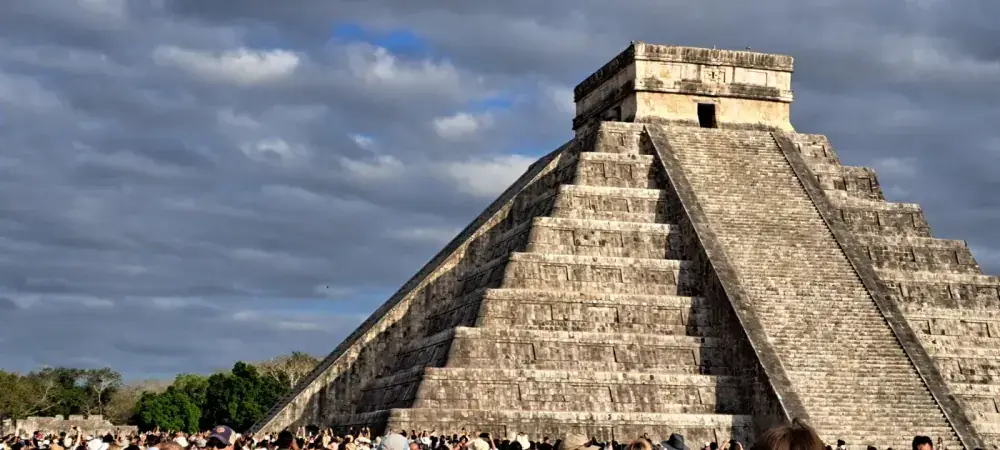
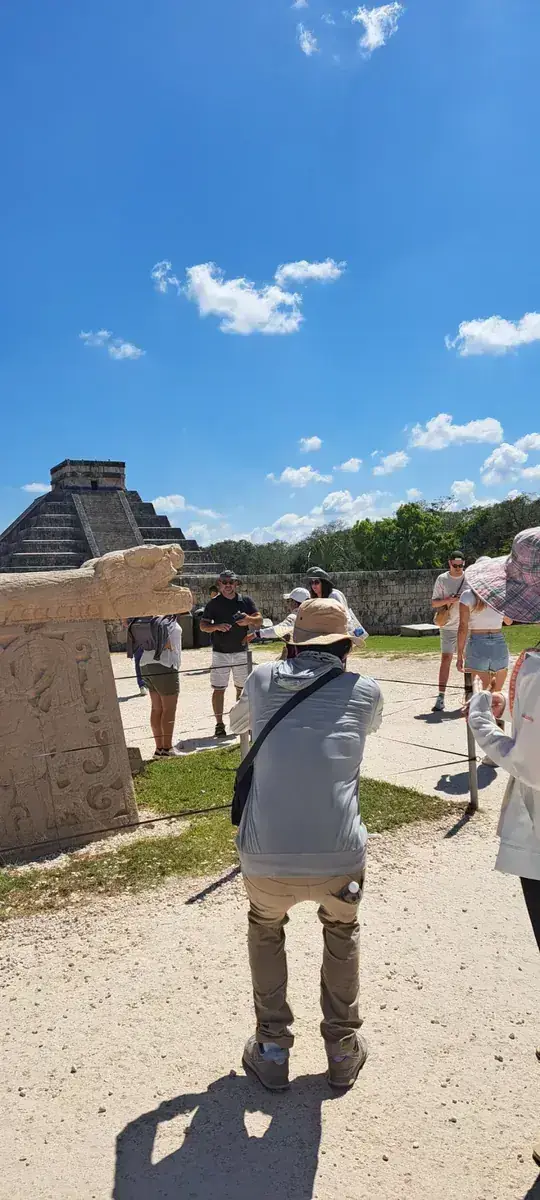
The serpent shadow — sometimes called the "descent of Kukulkán" — is the visual phenomenon that occurs when afternoon sunlight strikes the northwestern corner of El Castillo at precisely the right angle. As the sun moves, seven triangles of shadow form along the balustrade on the northern staircase, connecting to the carved serpent head at the pyramid's base.
The result is the illusion of a large serpent slithering down the temple steps. The serpent shadow on El Castillo builds gradually over roughly two and a half hours before sunset, becoming more defined as the light angle sharpens. Many travelers describe it as one of the most memorable moments of their visit.
Another remarkable feature visitors often discover: clapping at the base of El Castillo produces a chirped echo that closely resembles the call of the quetzal bird, a creature sacred to the Maya. For deeper context on the site's builders and timeline, see our Chichen Itza history guide.
When Does the Equinox Happen at Chichen Itza?
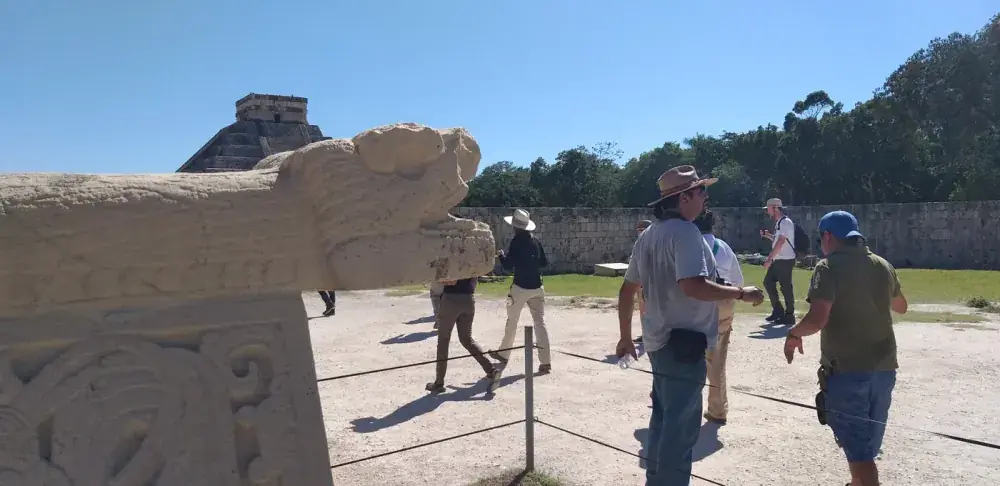
The equinox at Chichen Itza falls twice a year, around March 20 in spring and around September 22 in autumn. The serpent shadow effect is most pronounced during a window spanning roughly 3:00 PM to 5:30 PM on equinox day, though it remains visible several days before and after the precise date.
Spring equinox (March) falls during the dry season and peak tourist period, making it the more popular of the two dates. Autumn equinox (September) occurs during the rainy season — afternoon showers are possible but crowds are significantly smaller.
For broader seasonal planning, our best time to visit guide covers weather, crowd levels, and pricing across every month. You can also review opening hours and access details to plan your arrival time.
Is the Chichen Itza Equinox Worth Seeing?
For travelers interested in Maya culture and astronomy, the equinox at Chichen Itza is one of the most striking events at any archaeological site. The combination of ancient engineering, natural light, and crowd energy creates an atmosphere unlike any standard visit.
That said, equinox day itself brings significantly more visitors, hotter conditions later in the afternoon, and less flexibility to explore the rest of the site freely. Some travelers prefer the quieter atmosphere of a regular visit over the event-day intensity.
Equinox Visit
- Witness the serpent shadow phenomenon
- Energetic atmosphere with large crowds
- Unique photo opportunity
- More planning required
- Heavier crowds, less flexibility
Regular Visit
- Easier photos with fewer people
- More relaxed exploration pace
- Simpler logistics
- No serpent shadow visible
- Less event atmosphere
What to Expect During Equinox Season
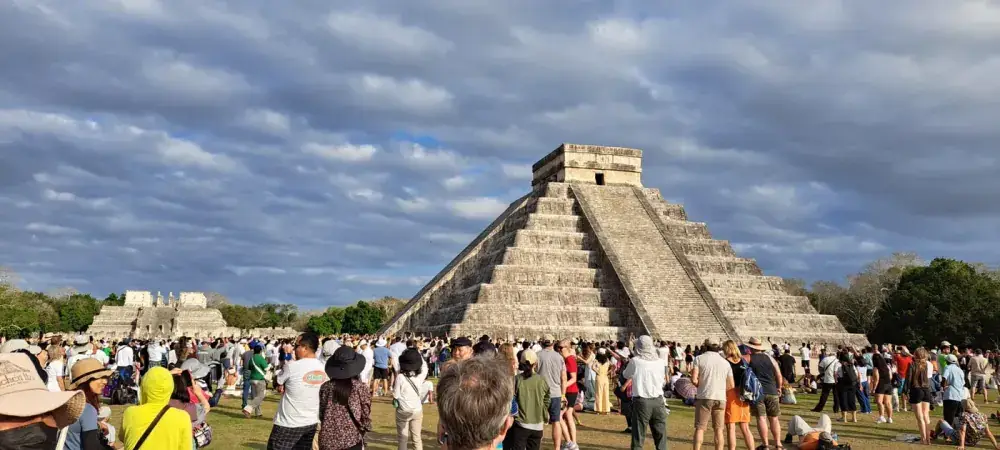
Chichen Itza can draw crowds of more than 10,000 visitors on the exact equinox date, with heavy numbers on the days immediately before and after. The north side of El Castillo becomes the focal point, with travelers gathering early to secure a clear viewing position.
Temperatures in the Yucatan during March are warm, often exceeding 30°C (86°F) by midday. Shade is limited within the archaeological zone, so preparation matters. September equinox visits carry the additional variable of possible afternoon rain showers.
Arriving at Chichen Itza by 11 AM gives you time to explore the broader site before positioning yourself for the afternoon shadow. Review our packing list and transport guide to prepare thoroughly.
Tips for Visiting Chichen Itza During the Equinox
- Arrive at Chichen Itza as early as you can on equinox day, because viewing positions near the north face of El Castillo fill up fast.
- Wear lightweight clothing and sun protection — a hat, sunscreen, and UV-blocking layers are essential. See our dress code guide
- Carry at least 2 liters of water per person, because shade at Chichen Itza is limited and the wait for the shadow is long.
- Expect more waiting and fewer empty-frame photo opportunities — review our photography tips to plan your shots
- Confirm current site access guidance before you travel, because equinox-day protocols at Chichen Itza can vary year to year.
- Plan transport to Chichen Itza in advance, because parking fills up quickly and traffic near the site increases during equinox week.
- Visiting one or two days before or after the equinox shows a nearly identical shadow effect with far smaller crowds.
- Check entrance fees ahead of time — see our entrance fee breakdown for current pricing
Can You Visit the Equinox With a Tour?
Yes — and many visitors find that a guided tour is the most practical way to experience the equinox at Chichen Itza. Equinox season brings additional logistical complexity: traffic around the site increases, parking becomes limited, and independent travelers may face longer ticket lines.
A private tour offers the most flexibility — your guide can adjust timing around crowd patterns, choose optimal positioning, and provide real-time context about the serpent shadow, the acoustics, and the Mayan calendar system. For solo travelers or smaller budgets, a Private Chichen Itza tour simplifies planning while keeping costs manageable.
Travelers visiting during equinox week can also consider the express private tour, a Chichen Itza only day that can be timed for the serpent shadow and started early to stay ahead of the crowds.
Equinox vs Regular Visit: Which Is Better?
| Option | Best For | Advantages | Drawbacks |
|---|---|---|---|
| Equinox season visit | Event-focused travelers, Maya culture enthusiasts | Unique serpent shadow, powerful atmosphere, once-in-a-lifetime feel | Larger crowds, more advance planning, hotter afternoon conditions |
| Regular season visit | Relaxed travelers, families, photography-focused visitors | Lighter crowds, easier photo opportunities, flexible scheduling | No serpent shadow, less event-specific atmosphere |
The Equinox and Maya Astronomy
Chichen Itza's reputation as a center of astronomical knowledge goes beyond the equinox shadow. The site contains multiple structures aligned with celestial events — including El Caracol, an observatory building whose windows track the movements of Venus, and the Great Ball Court, whose orientation reflects solar positioning.
The equinox effect on El Castillo is perhaps the most publicly accessible demonstration of this astronomical sophistication. The pyramid's nine terraces, 365 steps, and precise orientation were all intentional design choices that encoded the Mayan calendar into physical architecture. For travelers, witnessing the serpent shadow connects the abstract idea of "ancient astronomy" to something vivid and immediately understandable.
To explore the broader historical significance of the site, see our Chichen Itza history guide. For a complete overview of the archaeological zone and its key structures, visit the Chichen Itza destination page.
Tours depart from Cancun, Playa del Carmen, Tulum, and Merida. For the ultimate equinox experience, consider our luxury Chichen Itza tour.
If you want help matching this guide to your hotel, date, and group size, Maya Explorer Tours can help you compare private timing options on WhatsApp.
Book Your Chichen Itza Tour
Private Chichen Itza Tour
Exclusive guide, flexible schedule, hotel pickup included
Small-Group Chichen Itza Tour
Shared minivan capped at 12 to 15 travelers, guide and cenote included
Express Private Tour
Chichen Itza only, at your own pace
Usually responds in under 5 minutes · Free cancellation available
Frequently Asked Questions
Plan the Next Step
Use this guide to plan the details, then jump to the most relevant tour, departure page, or planning tool when you're ready to lock in dates.
Back to Chichen Itza
Return to the main planning hub for routes, fees, and tour options around equinox week.
Explore this pagePrivate Chichen Itza Tour
Helpful if you want more control over departure timing around equinox crowds.
Explore this pageLuxury Chichen Itza Tour
A comfort-first option during one of the busiest travel windows.
Explore this pageChichen Itza Travel Time Tool
Plan an early departure around equinox traffic and arrival timing.
Explore this pageReady to Plan Your Private Equinox Tour?
See the dedicated Private Chichen Itza Equinox Tour for private, guided planning around the Equinox, or message us on WhatsApp with your questions.
No payment required to enquire