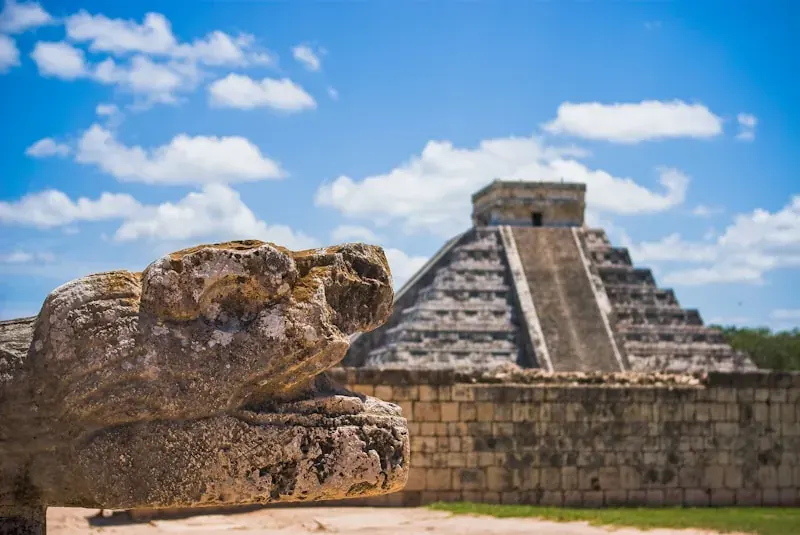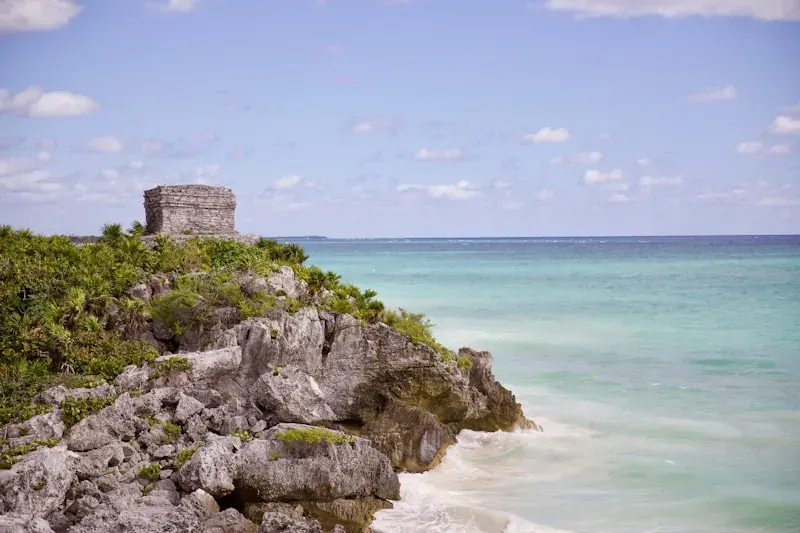
The best time to visit Tulum is November through April, when the Tulum dry season brings 24-30°C (75-86°F) temperatures, lower humidity, and calmer Caribbean Mexico weather. For the strongest balance between favorable Tulum weather and manageable Tulum crowds, November and early December usually outperform mid-peak dates. Tulum peak season runs from Christmas through March, with higher occupancy and beach club demand. June through September is whale shark Tulum season near Holbox and Isla Mujeres. July and August are wetter, while cenotes Tulum remain reliable year-round in Quintana Roo weather conditions.
Quick Comparison: Tulum by Season
| Season | Months | Weather | Crowds | Relative Price |
|---|---|---|---|---|
| Peak dry season | Dec-March | Excellent, 24-30°C | Very high | 30-50% premium |
| Shoulder dry | Nov, April | Very good, 26-32°C | Moderate | Standard |
| Early rainy | May-June | Hot, afternoon showers | Low-Moderate | 15-25% less |
| Rainy/hurricane | July-Oct | Hot, humid, risk of storms | Low | 20-35% less |
| Whale shark season | June-Sept | Variable | Moderate (near Holbox) | Book ahead |
Tulum cenotes maintain water near 25°C (77°F) in every month, so swimming quality stays high across seasons even when Caribbean Sea surface conditions vary.
November-April: Dry Season (Best Overall)
November: Tulum in November is often the most efficient choice for Tulum 2026 planning. Rain usually drops to 6-8 days, temperatures average 26-30°C (79-86°F), and most Christmas demand has not arrived. Dia de Muertos (Day of the Dead) (November 1-2) adds regional cultural programming across the Riviera Maya and Quintana Roo.
December-January: Tulum peak season conditions are excellent at 24-28°C (75-82°F), but beach clubs in the hotel zone can reach capacity by 11 AM on weekends. Tulum Ruins regularly see dense morning inflow after 10 AM, and rates can run 30-50% above standard.
February-March: Similar dry conditions continue, with spring break pressure in March and Semana Santa (late March or early April) producing the highest annual occupancy levels in the Riviera Maya.
April: Tulum in April transitions toward warmer highs near 32-34°C (90-93°F), but rain is still limited and post-Semana-Santa crowd levels improve quickly.
Private tour advantage in dry season: departure timing is decisive. Private itineraries can reach Tulum Ruins and Coba before 10 AM bus-volume peaks, preserving visibility, pacing, and photography flow.
Book a private Tulum ruins tour with early departure
May-June: Early Rainy Season
May begins the Tulum rainy season transition, with daytime highs commonly 32-36°C (90-97°F) and humidity increasing. Afternoon rain bands from roughly 2-5 PM are common and usually short, while mornings remain workable for outdoor routes.
Private tour planning handles this pattern by scheduling Tulum Ruins, Coba, and Sian Ka'an-facing viewpoints early, then shifting to flexible cenote blocks when rain windows pass. Gran Cenote and connected systems are typically less crowded than peak season, improving entry flow and swim time.
June starts whale shark season logistics north of Cancun toward Isla Mujeres and Holbox. If marine wildlife is a key objective, pairing a Tulum base with a dedicated whale shark day is usually the strongest June strategy.
Plan a private Tulum cenote adventure with morning-first timing
Whale shark tour from Cancun, June through September
July-September: Rainy Season (Whale Shark Peak + Hurricane Risk)
July and August are typically the wettest period in Quintana Roo weather patterns, averaging around 15-18 rain days monthly. Most rainfall is afternoon or evening, while mornings often remain clear enough for ruins and cenote sequencing. Caribbean Sea temperatures are warmest at roughly 29-30°C (84-86°F).
Whale shark season peaks in July and August, when aggregations north of Cancun can become very large. For travelers prioritizing whale shark Tulum access, these months provide the strongest probability window, though separate transport from Tulum is required.
Tulum hurricane season sits within the Atlantic season from June to November. Major direct impacts are infrequent but real, so weather-aware routing and hurricane-covering insurance are prudent in this interval.
September is usually the quietest month for Tulum crowds, with lower occupancy and easier same-day site access. Private tours reduce weather disruption by concentrating exposed locations in morning slots and keeping afternoon blocks adjustable.
Cenotes near Tulum are excellent year-round, see the full guide
October: Transitional (Good for Cenotes, Monitor Weather)
October remains inside hurricane season but usually trends better in the second half of the month: rain frequency falls, humidity eases, and access friction drops across Tulum beach and archaeological zones. Cenote clarity is often excellent after wet-season recharge, especially in cave systems with filtered light.
Private departures are useful in October because schedules can be shifted quickly around forecast updates, preserving site quality without losing full-day coverage.
Browse all private tours departing from Tulum
Month-by-Month Temperature and Rain Reference
| Month | Avg High | Avg Low | Rain Days | Crowd Level |
|---|---|---|---|---|
| January | 28°C / 82°F | 20°C / 68°F | 4-6 | Very High |
| February | 29°C / 84°F | 20°C / 68°F | 3-5 | Very High |
| March | 31°C / 88°F | 22°C / 72°F | 3-5 | Peak (Semana Santa) |
| April | 32°C / 90°F | 23°C / 73°F | 4-6 | Moderate |
| May | 34°C / 93°F | 24°C / 75°F | 8-10 | Low-Moderate |
| June | 34°C / 93°F | 25°C / 77°F | 12-14 | Low |
| July | 34°C / 93°F | 25°C / 77°F | 15-18 | Low |
| August | 34°C / 93°F | 25°C / 77°F | 15-18 | Low |
| September | 33°C / 91°F | 25°C / 77°F | 16-19 | Lowest |
| October | 32°C / 90°F | 24°C / 75°F | 12-14 | Very Low |
| November | 30°C / 86°F | 22°C / 72°F | 6-8 | Moderate |
| December | 28°C / 82°F | 21°C / 70°F | 4-6 | High |
What You're There For: Seasonal Compatibility
Tulum Ruins: Best November-April for cooler walking conditions and earlier crowd control. Official hours are usually 8 AM-5 PM year-round.
Cenotes Tulum: Strong all year; best clarity usually October-February. Gran Cenote remains one of the easiest high-visibility options for mixed-level swimmers.
Tulum beach: Most stable between November and April, with lower storm exposure than late-summer intervals in Caribbean Mexico weather cycles.
Coba: Productive in dry months for trail comfort; post-rain October-November can improve jungle wildlife activity.
Whale sharks: June-September only, peaking in July-August near Isla Mujeres and Holbox.
Private routing improves all of these by aligning the most heat-sensitive and crowd-sensitive stops first, then moving to flexible segments later in the day.
Browse all private tours departing from Tulum
Practical Tips for Planning
- Booking lead time: December-March generally requires 3-6 weeks; Semana Santa often needs 6-10 weeks; May-November can often be arranged 1-2 weeks out.
- Private timing edge: 7-8 AM private departures consistently beat the late-morning arrival wave at Tulum Ruins and major cenotes, and a Cancun to Tulum airport transfer runs year-round at roughly 90 minutes.
- Packing: Dry season favors light sun layers; rainy months need quick-dry fabrics and compact rain shells.
- Cash: Carry Mexican pesos for cenotes and local vendors in Tulum Pueblo; card acceptance is wider in the hotel corridor.
For most travelers, November through early December is the strongest overall answer to when to go to Tulum: stable weather, manageable occupancy, and standard pricing windows before full holiday compression. If whale shark access is non-negotiable, June through September is the only practical season.
See the complete Tulum destination guide for logistics after choosing your month. For route-specific planning and timing strategy, review all private tours departing from Tulum.