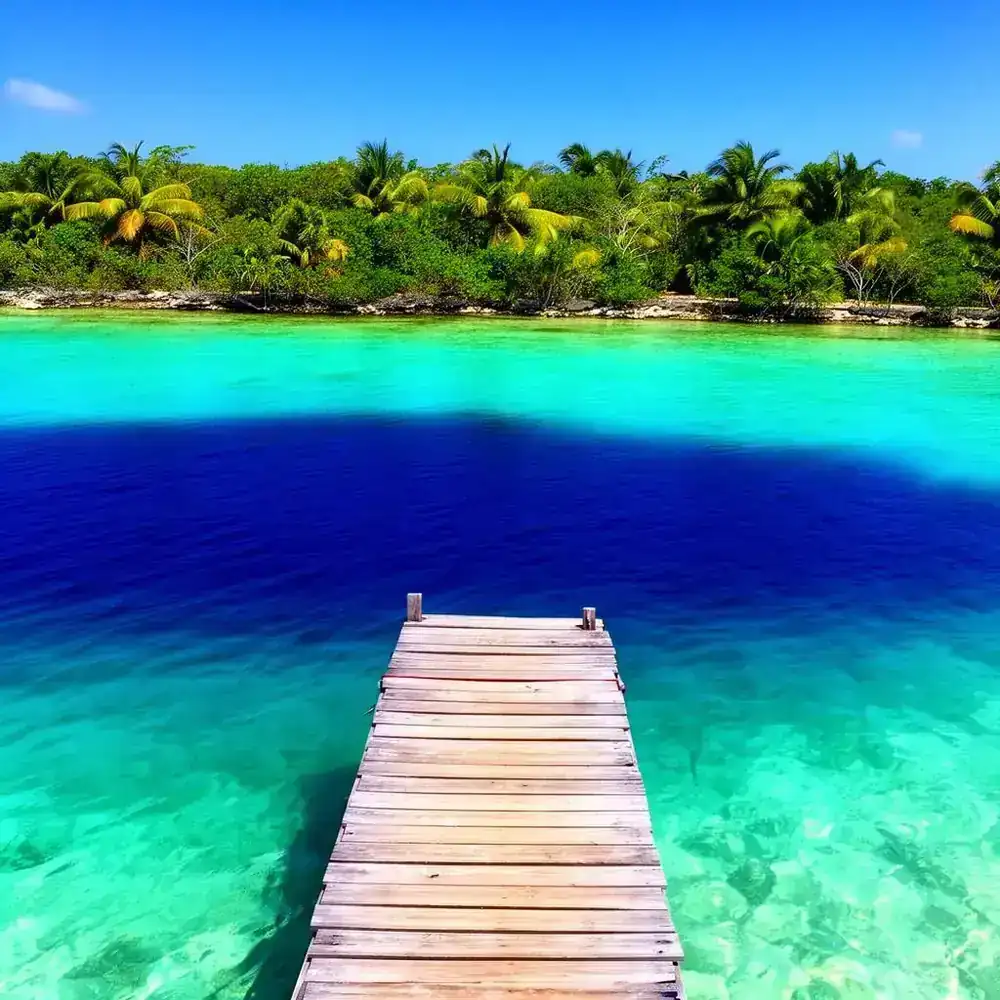
Bacalar: The Lake of Seven Colors
Bacalar Lagoon is one of Mexico's most visually striking natural destinations — a 60-kilometre freshwater lagoon in southern Quintana Roo fed by underground cenote systems that produce extraordinary water clarity and colour variation. The name "Lake of Seven Colors" comes from the bands of turquoise, teal, emerald, and deep indigo that shift with the depth of the water and the angle of the sun: the same cenote water that runs beneath the Yucatan Peninsula surfaces here in a vast, open lagoon rather than a limestone sinkhole.
The town of Bacalar sits on the western shore of the lagoon and dates to the colonial era. Its lakefront promenade is lined with boutique hotels, docks, and restaurants. The centrepiece of the town is Fuerte San Felipe, an 18th-century Spanish fort built to defend the lagoon trade route against pirate attacks — now a free museum with original cannons and lake views. A Bacalar Lagoon sailing tour is the most popular way to experience the water.
Unlike the heavily visited Riviera Maya coast, Bacalar sees a fraction of the tourist volume of Cancun or Tulum. The lagoon is too far south for cruise ship day trips and too inland for beach resort visitors, which keeps the atmosphere genuinely unhurried. Travellers who make the journey find a destination that still feels like a local secret despite growing international attention.
Quick Facts: Bacalar
| Location | Quintana Roo, Mexico — southern Caribbean coast |
| Lagoon Length | 60 km — fed by underground cenote systems |
| Distance from Cancun | 325 km — approx. 3.5–4 hours by car |
| Distance from Tulum | ~140 km — approx. 2 hours by car |
| Fort | Fuerte San Felipe — 18th-century lakefront fort |
| Best Time to Visit | November to April (dry season) |
Sailing the Lake of Seven Colors
Sailing is the defining Bacalar experience. Catamarans and wooden sailboats depart from the town malecón each morning, spending three to four hours on the open lagoon and anchoring at swimming spots that showcase the colour gradients most dramatically. From the water, you can see the transition from shallow turquoise near the shore to the deep indigo of the main channel — a colour shift driven by depth, water clarity, and the white sand bottom below.
Most tours include a stop at the Pirates Channel (Canal de los Piratas), a narrow waterway that cuts through the jungle bordering the lagoon's eastern edge. The channel is calm, warm, and surrounded by vegetation — one of the best swimming spots on the lagoon, where the gentle current allows you to drift rather than swim. Open-bar sailing packages are common, but private tours allow you to set your own pace and choose stops.
Fort San Felipe and the Town of Bacalar
Fuerte San Felipe stands on the waterfront at the centre of town, built between 1727 and 1733 to defend the lucrative lagoon trade route against pirate raids from the Bay of Honduras. The fort's original cannons remain in position facing the lagoon, and the small museum inside documents the colonial history of the region, including the role of the lake as a freshwater supply route for settlements across southern Quintana Roo. Entry is free.
The town surrounding the fort is walkable and distinctly uncommercialised compared to Tulum or Playa del Carmen. The malecón runs along the lakefront with independent restaurants and small hotels that provide direct dock access for swimming. For travellers who want a Mexican town atmosphere without resort infrastructure, Bacalar is one of the few genuinely intact options in the region.
Kayaking, Paddleboarding, and the Cenote Connection
Kayak and paddleboard rentals are available from most hotels and lakefront operators for approximately $10–15 USD per hour. The lagoon is calm and wide with no meaningful currents, making it accessible to beginners. Early morning is the best time to paddle — the water is glassy, the light produces the most vivid colour contrast, and boat traffic is minimal before the sailing tours depart.
What makes Bacalar unusual is what lies beneath it. The lagoon is fed from below by the same underground cenote system that runs across the Yucatan Peninsula — this is why the water behaves chemically like a cenote despite being an open-air lagoon. The clarity is a product of that freshwater source and the absence of river runoff that would normally cloud a lake of this size. Bacalar sits at the southernmost reach of the Yucatan karst system; some of its underwater springs connect directly to cave networks accessible by certified cave divers.
Best Time to Visit
November to April is the dry season — the best conditions for sailing, swimming, and kayaking. The lagoon is calmer, humidity is lower, and afternoon rain is rare. July and August are popular with Mexican tourists but bring daily rain showers and higher humidity. September and October are the least visited months; hurricane season peaks in late September, though direct storm tracks to this inland location are uncommon.
One practical advantage: Bacalar sits 325 km from Cancun and 140 km from Tulum — far enough south to be entirely off the cruise ship and package resort circuit. Even during Mexican holiday weeks (Semana Santa, Christmas) the lagoon feels quiet by Riviera Maya standards, though accommodation fills up and should be booked 2–3 months ahead for peak periods.
How to Get There
Bacalar is 325 km from Cancun — approximately 3.5–4 hours by car or private transfer along Highway 307 south. ADO buses from Cancun run several times daily to Bacalar and take approximately 4 hours ($25–35 USD). From Tulum, the drive is approximately 140 km (about 2 hours), making it feasible as a long day trip from a Tulum base.
There is no airport in Bacalar. The closest international airport is Cancun (CUN), roughly 4 hours north. A rental car provides the most flexibility for exploring the region; Bacalar itself is compact and walkable, but the surrounding area rewards having your own transport.
Practical Tips for Visiting Bacalar
- Book sailing tours in advance during high season (December–March) — small-boat operators have limited capacity and fill quickly, especially around Christmas and Semana Santa.
- Use reef-safe sunscreen only — Bacalar has restrictions on chemical sunscreens to protect the lagoon ecosystem. Bring your own biodegradable brand rather than relying on local availability.
- Avoid swimming near motorised boat traffic areas — the lagoon is shared with private vessels, particularly near the main dock. The best swimming spots are away from the town centre.
- Some malecón restaurants have direct dock access — look for establishments with ladders into the water, where you can eat and swim from the same terrace.
- Book accommodation 2–3 months ahead for Semana Santa (Easter week) and Christmas — waterfront properties fill first and the town has limited inventory compared to Cancun or Tulum.
- Carry cash — many smaller restaurants, boat operators, and market vendors don't accept cards. ATMs are available in town but supply can be unreliable during peak weeks.
Key Takeaways
- Bacalar Lagoon is 60 km long and fed by underground cenote systems that produce exceptional water clarity and the colour variation that earned it the name "Lake of Seven Colors."
- The primary experience is sailing — catamaran and sailboat tours cover the colour bands, the Pirates Channel, and open swimming stops across a 3–4 hour route.
- Fuerte San Felipe, an 18th-century Spanish fort on the lakefront, is free to enter and documents the lagoon's history as a colonial trade route.
- Located 325 km from Cancun and 140 km from Tulum — a half-day drive from either, but genuinely off the mainstream tourist circuit.
- See the Bacalar Lagoon Tour for guided sailing options departing from the lagoon.
- Tulum — 140 km north is the closest major tourist town and a practical overnight base for a Bacalar day trip.
- Browse all tours from Cancun for Bacalar and other southern Quintana Roo destinations, or compare more nature tours in Yucatan if you want lagoons, reefs, or wildlife.
Recommended Tours for Bacalar Visitors
Helpful Next Steps for Bacalar
Choose the next step that matches how you want to experience Bacalar, from a private guided tour to nearby stops or the wider area.
Multi-Day Yucatan Private Tour
The most natural way to combine Bacalar with Chichen Itza, Tulum, and the wider peninsula.
View detailsTulum
3 hours north of Bacalar — clifftop Maya ruins, cenotes, and Sian Ka'an Biosphere Reserve.
View detailsSian Ka'an Biosphere Reserve
UNESCO World Heritage Site between Bacalar and Tulum — wildlife, Mayan canals, protected coastal habitat.
View details