Rio Lagartos: Pink Flamingo Reserve & Las Coloradas, Yucatan
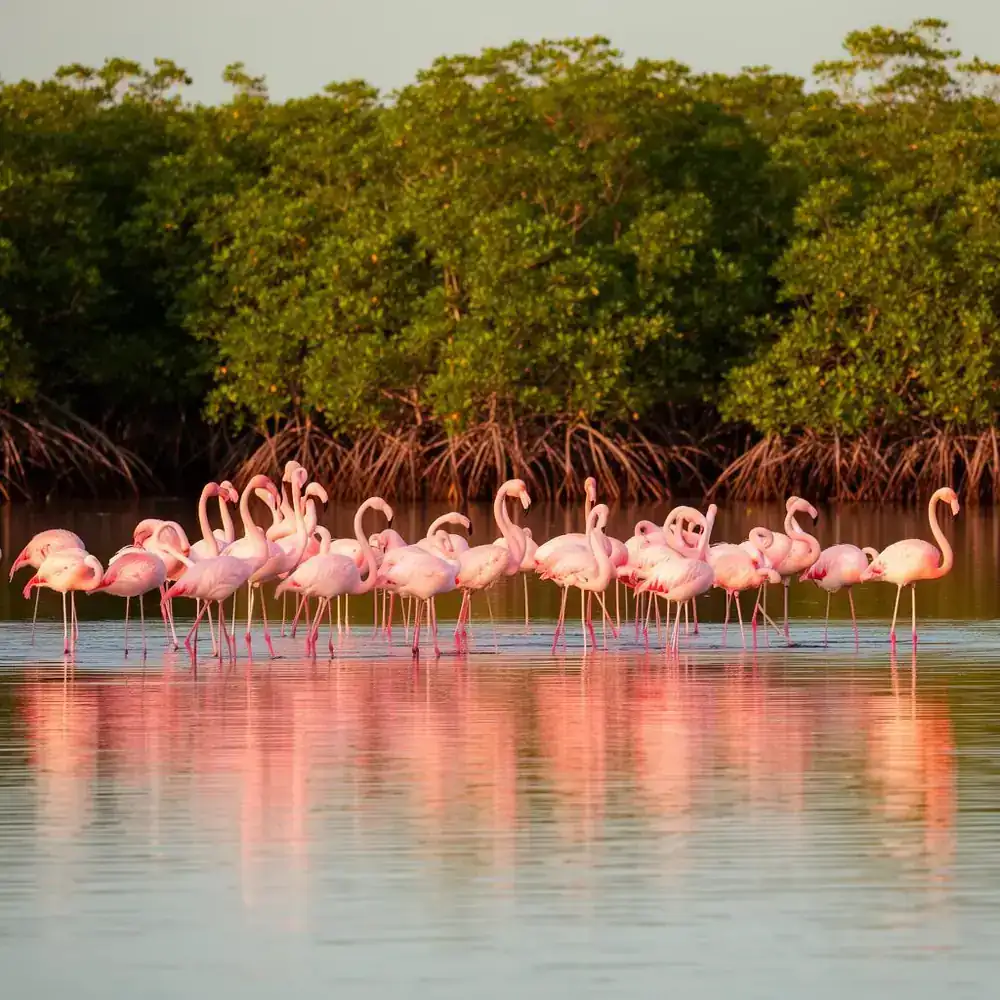
Río Lagartos sits at the edge of a biosphere reserve on the northern Yucatan coast — a small fishing village that happens to be home to the largest colony of American flamingos in North America. Up to 20,000 birds inhabit the shallow estuary at peak season, feeding on the algae and brine shrimp that give them their pink coloration. The flamingos are not captive, not seasonal visitors, and not staged — they are a permanent wild population in one of Mexico's most protected coastal habitats.
The Ría Lagartos Biosphere Reserve covers 60,348 hectares of coastal lagoon, mangrove, and tidal flat — a UNESCO Biosphere Reserve since 1986 and a Ramsar Wetland of International Importance. Beyond flamingos, the reserve supports over 350 bird species and a healthy population of American crocodiles in the mangrove channels.
Eighteen kilometres east of the village, Las Coloradas is a group of naturally pink-to-red hypersaline lakes — the color caused by halobacteria and brine shrimp in water with 10 times the salinity of the sea. Most visitors combine both in a single day. A private Río Lagartos flamingo tour handles transport from Cancun or Merida and includes the licensed boat guide required for estuary access.
Quick Facts: Río Lagartos
| Reserve Status | UNESCO Biosphere Reserve (1986) + Ramsar Wetland of International Importance |
| Reserve Size | 60,348 hectares of coastal lagoon, mangroves, and tidal flats |
| Flamingo Species | American flamingo (Phoenicopterus ruber) |
| Flamingo Population | Up to 20,000+ birds — largest colony in North America |
| Bird Species | 350+ recorded in the reserve |
| Las Coloradas | Naturally pink hypersaline lakes — 18 km east of the village |
| Distance from Cancun | ~230 km northwest — approximately 3 hours by car |
| Distance from Merida | ~190 km northeast — approximately 2.5 hours by car |
| Best Flamingo Season | Year-round — peak April–June (nesting and courtship) |
| Best Departure Time | 6–7 AM for flamingo activity and bird variety |
The Flamingo Colony at Río Lagartos
The American flamingo (Phoenicopterus ruber) is the only flamingo species native to North America. Río Lagartos is one of only three significant nesting sites for the species in the world — the others are at Celestún on Yucatan's western coast and in the interior Yucatan lagoons. The colony at Río Lagartos regularly exceeds 20,000 birds and is the largest concentration in North America.
The flamingos feed in the shallow estuary on algae, crustaceans, and brine shrimp. The carotenoid pigments in this diet produce and maintain their pink coloration — flamingos in captivity without access to this food gradually turn white. The feeding behavior is visible from the boat: groups of birds sweeping their bent bills through the water in synchronized motion, filtering food through specialized lamellae in their bills.
Flamingo numbers peak during nesting season (April–June) when courtship displays — synchronized walking, wing spreading, and honking — are at their most dramatic. During active nesting, access to nesting zones is restricted and boats observe from the permitted perimeter. Flamingos are present year-round; the difference between seasons is primarily numbers and behavior, not presence.
Las Coloradas: The Pink Lakes
Las Coloradas are a group of naturally pink-to-red colored lakes 18 km east of Río Lagartos village, within the biosphere reserve boundary. The intense color is caused by three overlapping factors: halobacteria (Halobacterium salinarum) that produce a red pigment in response to high salinity, microalgae producing beta-carotene, and brine shrimp whose bodies are saturated with carotenoids. The water salinity is approximately 10 times that of seawater — the same hypersaline environment that supports the flamingo diet in the estuary.
The color varies from pale pink to deep magenta depending on time of day, season, and angle of light. Dry season (November–April) brings the most intense color as evaporation concentrates the microorganisms. Late afternoon light produces the most vivid photography conditions — the color appears to deepen as the sun drops. The viewing area is a road-level platform above the lakes; swimming is not permitted and the restriction is strictly enforced.
Most Río Lagartos tours combine the flamingo boat tour in the morning with a drive to Las Coloradas in the afternoon — the timing aligns well with both the flamingo activity window (morning) and the best Las Coloradas light (afternoon).
Wildlife Beyond Flamingos
Ría Lagartos supports over 350 recorded bird species in addition to flamingos. The mangrove channels and tidal flats are habitat for roseate spoonbills, wood storks, reddish egrets, American oystercatchers, tri-colored herons, and multiple kingfisher species. Early morning boat tours (departing 6–7 AM) offer the greatest bird variety — the estuary is most active in the first two hours after dawn.
American crocodiles (Crocodylus acutus) inhabit the lagoon and mangrove channels — adults reach up to 4 meters and are regularly spotted from the boat. These are wild, undisturbed animals in their natural habitat; the crocodile population at Río Lagartos is considered one of the healthiest in Mexico. The reserve's interior forest also supports jaguar and ocelot, though these are rarely encountered on standard day tours.
How to Visit Río Lagartos from Cancun or Merida
From Cancun, Río Lagartos is approximately 230 km northwest — about 3 hours by car via Highway 180 west and Highway 295 north. A private tour from Cancun departs at 6–7 AM to arrive at the village before the flamingos disperse in the midday heat, and returns by 6–7 PM. The distance makes this a genuine full-day commitment from Cancun — plan accordingly.
From Merida, the reserve is approximately 190 km northeast — about 2.5 hours by car. Tours from Merida can combine Río Lagartos with Valladolid or Ek Balam on a northern Yucatan loop — Valladolid is 65 km south of the village and serves as a natural midpoint between Merida and Río Lagartos.
The flamingo colony is only accessible by boat — there is no land-based viewing point. Boats are available at the village dock, or included in a private tour from Cancun or Merida. A private boat guarantees your own vessel and guide and allows closer approach than shared tour boats. Browse nature tours in Yucatan for the full range of wildlife options across the peninsula.
Practical Tips for Visiting Río Lagartos
- Depart by 6–7 AM — flamingos are most active feeding from dawn to mid-morning. Afternoon visits still offer sightings but birds are typically stationary and in smaller visible groups.
- Private boat over shared tour — a private boat allows the guide to position you closer to feeding flamingos and spend more time with crocodile or bird sightings. Shared boats on larger vessels limit flexibility.
- Las Coloradas in the afternoon — plan the flamingo boat tour for early morning and Las Coloradas for the afternoon drive. The timing aligns with both peak windows.
- Biodegradable sunscreen and insect repellent — the estuary environment means mosquitoes at dawn and dusk. Chemical sunscreen is prohibited within the reserve.
- Bring food and water — Río Lagartos village is small with limited services. The dock area has a few basic restaurants but bringing your own supplies for the boat tour is recommended.
- During nesting season (March–June) — access to nesting zones is restricted. Tours view flamingos from the permitted perimeter; the birds are still fully visible and numbers are at their peak.
Key Takeaways
- Río Lagartos hosts the largest colony of American flamingos in North America — up to 20,000 birds, present year-round, peak April–June.
- The flamingo colony is only accessible by boat — no land viewing point exists. Licensed boat guide required.
- Las Coloradas pink lakes are 18 km east — naturally colored by halobacteria and brine shrimp, most vivid in dry season (November–April) afternoon light. Swimming not permitted.
- 350+ bird species in the reserve plus American crocodiles (up to 4m) in the mangrove channels.
- From Cancun: 230 km, 3 hours — genuine full-day commitment. From Merida: 190 km, 2.5 hours.
- Depart by 6–7 AM for peak flamingo activity. Combine flamingo boat tour (morning) with Las Coloradas (afternoon) in a single day.
- See the Río Lagartos Flamingo Tour for private boat tours with hotel pickup from Cancun or Merida.
- Browse tours from Cancun or tours from Merida for departure options.
Helpful Next Steps for Rio Lagartos
Choose the next step that matches how you want to experience Rio Lagartos, from a private guided tour to nearby stops or the wider area.
Río Lagartos Flamingo Tour
Private boat tour to the flamingo colony + Las Coloradas pink lakes — licensed guide, hotel pickup from Cancun or Merida.
View detailsValladolid — 65 km South
Colonial city with cenotes and Ek Balam ruins — natural stop on the Cancun–Río Lagartos route.
View detailsEk Balam Ruins
Climbable Maya pyramid 80 km south — combinable with Río Lagartos for a full northern Yucatan day.
View details